How structured recruitment solves dentistry's staffing problems
Alma Recruiting | Research series | 2026
At a glance
The German dental sector is facing a growing shortage of qualified dental assistants (ZFA). Vietnamese trainees are emerging as one of the strongest-performing groups in this field, with demonstrably high retention rates, a strong work ethic, and rapid integration. Within five months of arrival, most trainees transition from initial uncertainty to confident, productive team members.
The model works because the barrier to entry is high. Candidates who successfully navigate language preparation, visa processes, and relocation are structurally preselected for commitment. Combined with structured support from specialized agencies and culturally sensitive employers, this creates a staffing solution that outperforms domestic recruitment in retention and long-term stability.
However, the quality of the outcome depends entirely on the quality of the process. Ethical oversight, genuine language readiness, and follow-up support are not optional extras. They are the foundation on which the entire model rests.
The dental sector has a staffing problem that hardly anyone talks about
While Germany's nursing shortage dominates the headlines, the dental industry is grappling with its own acute and growing labor shortage. The role of dental assistants (ZFA) is far more complex than many assume. It includes patient management, strict hygiene protocols, administrative coordination, and critical chairside assistance during advanced procedures such as implant placements. Finding reliable domestic ZFA staff is becoming increasingly difficult.
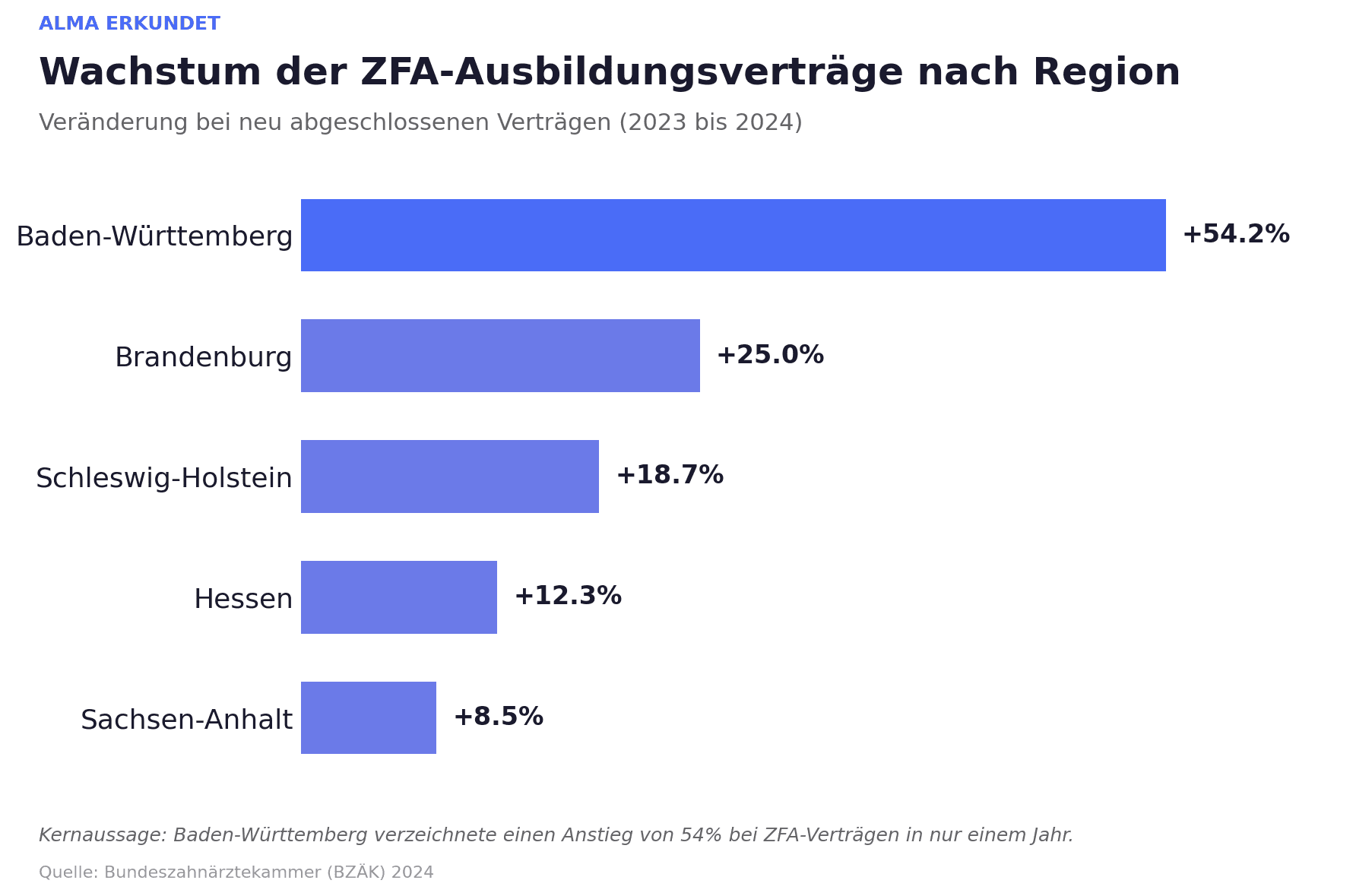
The numbers speak for themselves. Data from the German Dental Association (BZÄK) show significant regional variation in training contract numbers. Baden-Württemberg recorded a 54% increase in newly signed ZFA training contracts between 2023 and 2024. Brandenburg reported an increase of 25%. These figures reflect the intensity of demand, but also the difficulty of meeting it through traditional domestic channels alone.
This is not a temporary dip. The volume of junior staff needed each year to maintain dental care standards across Germany requires a steady, high-quality pipeline that most regions simply cannot sustain without international recruitment.
Why Vietnam and why this path works
Vietnam's suitability as a partner country for German vocational training is no coincidence. The country has a young, motivated population that is actively seeking internationally recognized vocational training and long-term career opportunities. The bilateral relationship between Germany and Vietnam has already produced successful, federally supported recruitment models in nursing and elderly care, providing a proven operational template that has been adapted for the dental sector.
This matters because the ZFA pathway is not an improvised experiment. It builds on years of institutional learning from earlier programs, uses mature administrative processes, established integration mechanisms, and tried-and-tested quality assurance systems. The infrastructure already exists. The dental sector is simply the next field to benefit from it.
For employers, this means the pathway carries far less risk than experimental recruitment efforts. The processes have been refined, support structures are in place, and bilateral cooperation offers a level of institutional backing that individual hiring efforts cannot replicate.
How the recruitment ecosystem actually works
The success of Vietnamese ZFA trainees is not just the result of individual effort. It depends on a structured ecosystem that manages the entire journey from selection in Vietnam to long-term support in Germany.
What the process covers
Recruitment and selection: Identifying candidates with the right academic background, motivation, and personal suitability for the demands of a dental practice.
Language and cultural preparation: Intensive German training before departure in Vietnam, ensuring that candidates arrive with real conversational and technical language skills.
Logistics management: Handling visa applications, recognition procedures, travel logistics, and the administrative complexity that most dental practices cannot manage in-house.
Integration and ongoing support: Personal advisors who assist after arrival with housing, bureaucracy, and social adjustment in the new country.
The scale of these operations is considerable. A specialized agency successfully placed 210 Vietnamese dental trainees across Germany within a single year. In Hamburg, the regional dental association (ZÄK) and the Association of Statutory Health Insurance Dentists (KZV) actively inform their members about these placement services and list direct contact details for the agencies involved. This level of institutional support signals professional legitimacy and gives employers confidence in the quality of the pipeline.
What the performance data show
The evidence on Vietnamese ZFA trainees is consistent across multiple sources. Four metrics stand out.
Metric | What the data show | Implications for employers |
Retention | Significantly lower turnover rates compared with other groups | Lower long-term hiring costs and greater team stability |
Motivation | Consistently described as highly motivated, eager to learn, and committed | Positive impact on practice productivity and team culture |
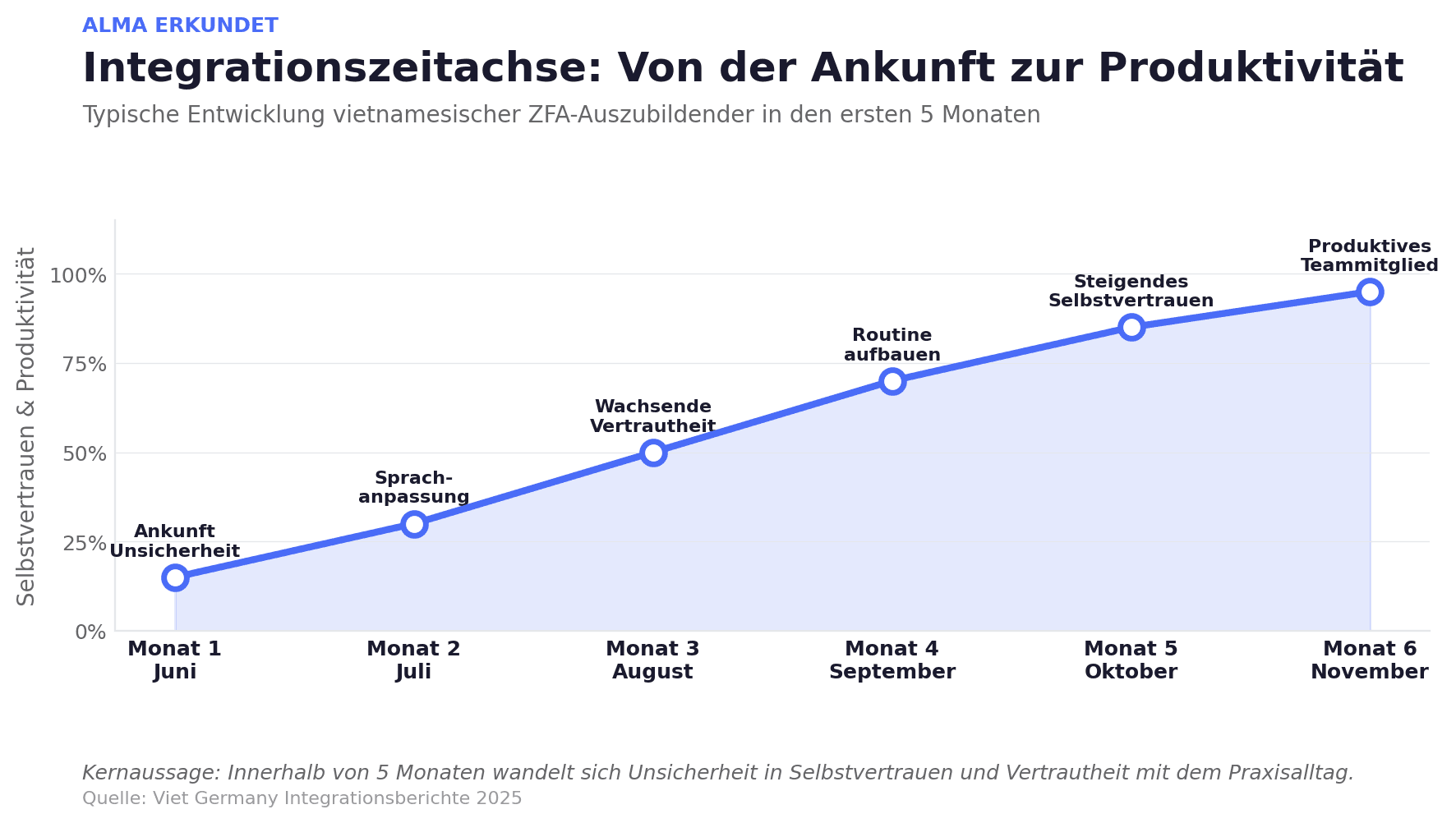
Integration speed | Transition from uncertainty to confidence within about 5 months | Faster productivity, less supervision effort |
Adaptability | Quick adjustment to new technologies and complex medical procedures | Suitable for advanced and digitally equipped practices |
Why the Retention Rate Is So High
The retention advantage of Vietnamese dental assistant trainees is no coincidence. It is a structural result of the path itself.
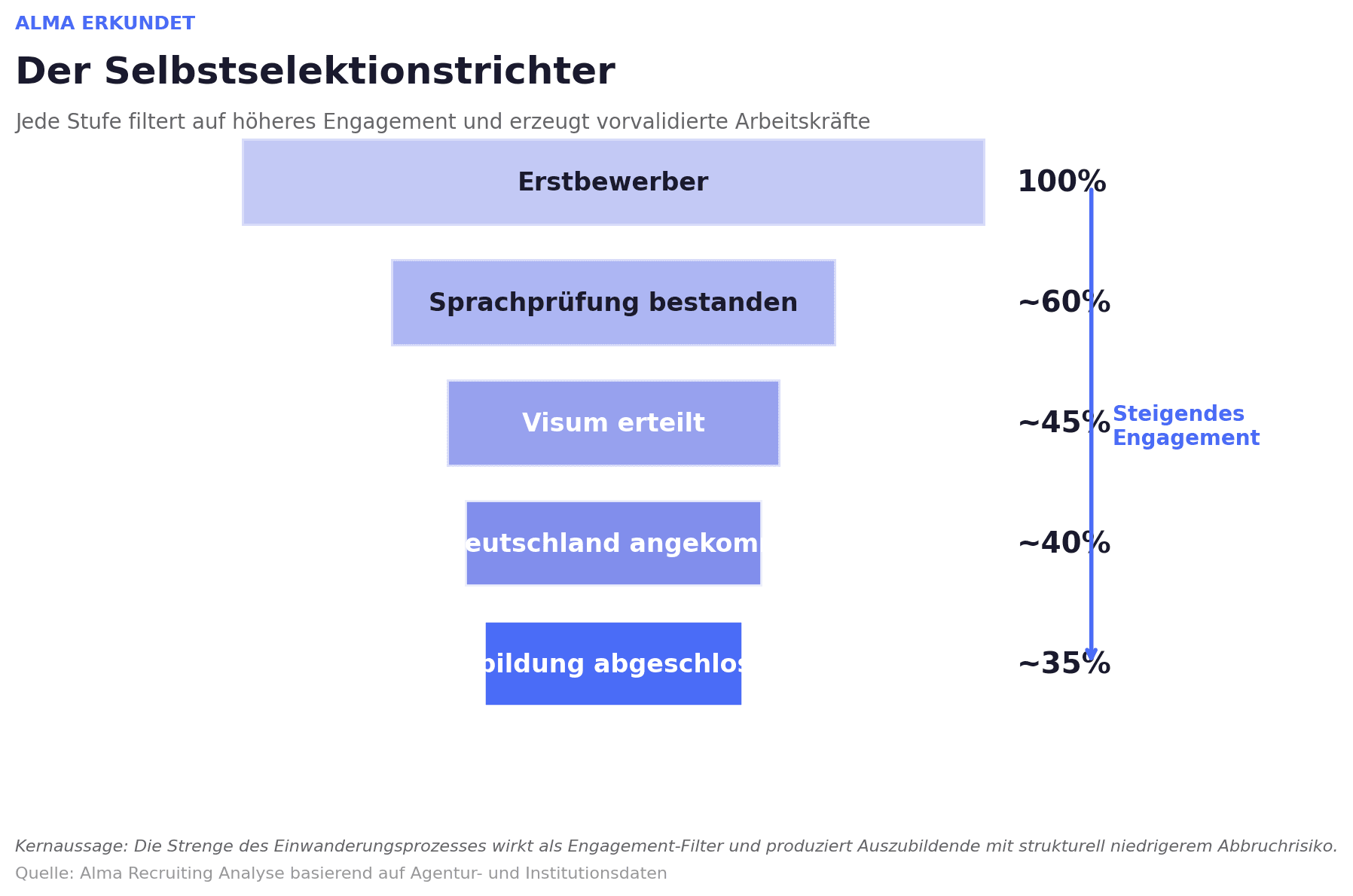
To reach a German dental practice, a Vietnamese candidate must pass strict language tests, obtain a visa, leave behind family and social network, and move to a country where there are often few or no existing contacts. This journey requires significant personal, logistical, and emotional investment before the training even begins.
This high level of upfront commitment acts as a strong self-selection mechanism. Candidates who successfully overcome these hurdles are structurally prevalidated for commitment, resilience, and genuine intent to build a long-term career in Germany. The costs of failure or early withdrawal are exceptionally high for these trainees, which is directly reflected in the lower turnover rates that employers consistently report.
In practice, this means that dental practices retain a workforce whose commitment has already been tested before the first day. The real financial benefit lies not in the initial cost comparison with hiring an experienced specialist, but in avoiding the recurring costs of frequent staff turnover and constant retraining that burden domestic recruitment in this sector.
Five Months: The Critical Integration Window
Detailed reports on the development of trainees show a consistent pattern. Cohorts that arrive in June, marked by initial uncertainty and the challenges of a new language and environment, show a clear change by November. Within this roughly five-month window, uncertainty turns into confidence, and the trainees show clear familiarity with the daily routines of practice life.
This accelerated integration is driven by three interacting factors:
The trainees’ own willingness to get involved: Personal resilience and genuine motivation to succeed in the new environment.
Openness of the training practice: Employers who create a culturally sensitive and welcoming workplace and understand the particular burdens of international trainees.
Stable, structured support: Ongoing assistance from agencies and mentors during the critical first months, addressing both professional and personal challenges.
When all three factors are present, the transition from newcomer to productive team member happens remarkably quickly. If one is missing, the process slows significantly and the risk of dropping out increases.
Career Ambitions as a Retention Factor
The high retention rate is also rooted in genuine career ambitions. For many Vietnamese trainees, the ZFA qualification is not an end in itself, but a fundamental step toward higher professional goals and permanent residence in Germany.
Trainees often express concrete career goals after qualification: becoming a dental hygienist, moving into practice management, or specializing further in clinical areas. Some show particular enthusiasm for complex procedures such as implant placements, reflecting an active interest in the most technically demanding aspects of modern dentistry.
This career orientation matters to employers because the initial structural commitment to migration is channeled into sustainable professional loyalty within the practice. Practices that recognize these ambitions and offer formal paths for advancement are best positioned to retain these team members for years or even decades.
The Cohort Effect: Why Group Placements Work
An emerging strategy with strong evidence is placing multiple Vietnamese trainees in a single practice. Reports on these group placements describe them as highly successful, with the cohort model addressing one of the biggest challenges in international recruitment: social isolation.
When trainees are placed together, they immediately form a self-sustaining support network. This peer group provides cultural familiarity, a shared language for emotional processing, and practical mutual support during the most difficult adjustment phase. The result is a marked reduction in culture shock and social isolation, which in turn reduces the mental and administrative burden on the employer of managing each individual trainee’s social well-being.
Practices that have adopted this approach report smoother integration, stronger team cohesion among trainees, and an overall faster transition to productivity.
What Employers Must Get Right
The data clearly show that the Vietnamese ZFA model works. But it works because of specific conditions that must be actively maintained by everyone involved.
For dental practices considering this path
Understand the personal context: These trainees have left their families far behind and come to a country where they may have no social network. Genuine sensitivity to this situation has a direct effect on professional performance.
Invest in the first five months: The integration window between arrival and confidence is about five months. Structured support during this period determines whether you gain a long-term team member or a short-term experiment.
Offer real career prospects: The biggest risk to retention does not occur during training, but immediately afterward, when career expectations are not met. Formalize paths for advancement and adhere to recommended pay scales.
Consider group placements: If your practice has the capacity, placing two or more trainees together significantly improves social integration and reduces the individual risk of dropping out.
Work with accredited partners: The quality of the recruitment agency is crucial. Transparent contracts, genuine language preparation, and ongoing follow-up support are non-negotiable.
Compensation and Fair Treatment
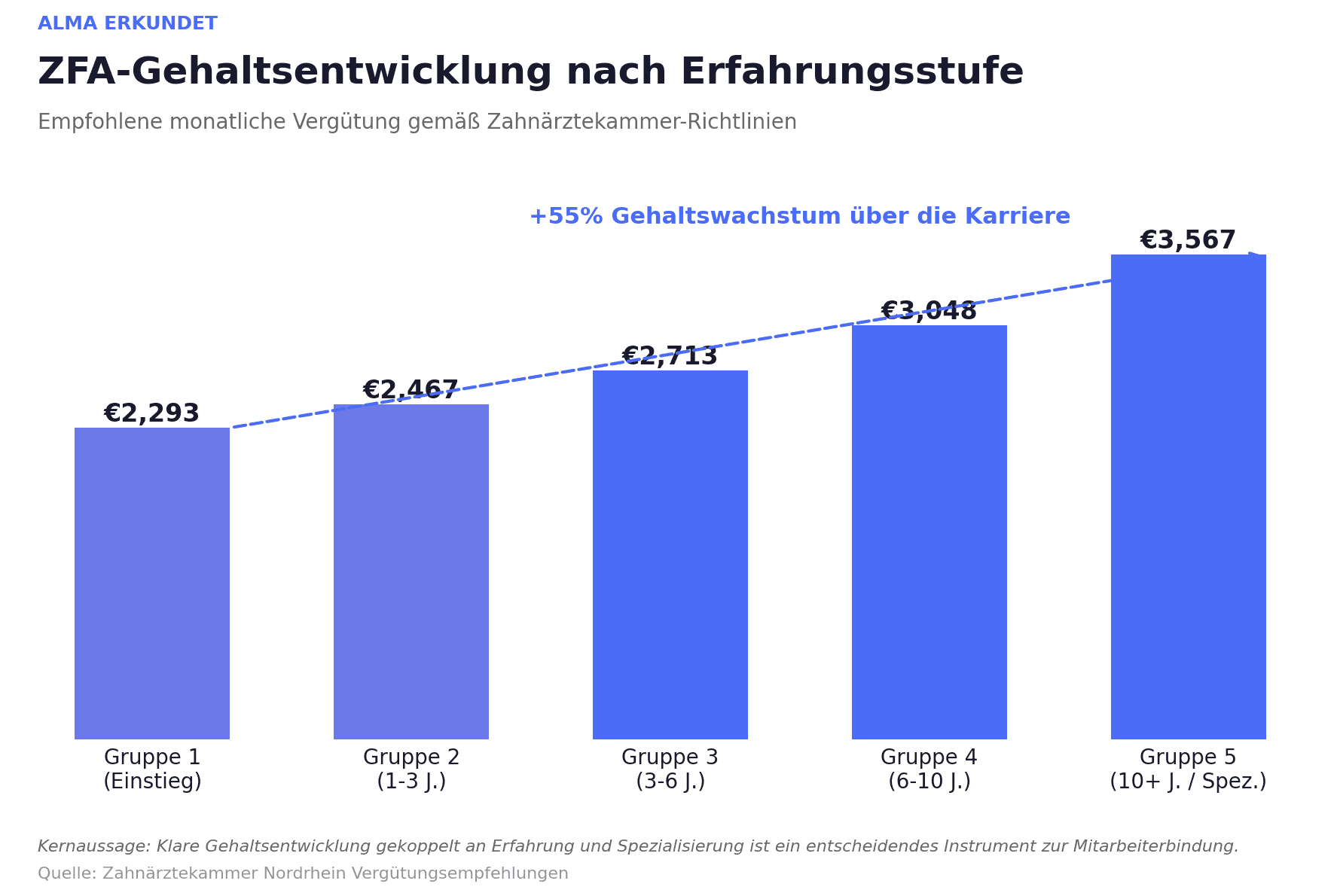
Maintaining the integrity of this pathway requires adherence to professional compensation standards. Regional chambers such as the Dental Association of North Rhine publish recommended salary scales for ZFA professionals, ranging depending on experience and specialization level from about 2,300 to over 3,500 euros per month.
Fair compensation is not only an ethical requirement. It is a tool for retention. Trainees who see clear financial progress tied to their professional development are much more likely to stay with the practice long term. Conversely, practices that cut corners on pay after qualification risk losing exactly the team members they trained for years.
About this report
This is the second in a series of research publications from Alma Recruiting, offering German employers evidence-based insights into international recruitment pathways. All findings are drawn from institutional reports, publications by professional associations, data from specialized agencies, and qualitative firsthand accounts.
If you are a dental practice and are exploring international recruitment for the first time or looking for a more structured alternative to previous approaches, we would be happy to speak with you.
Sources
Apprentice and Skilled Worker Finder: Vietnamese trainees in medicine and dentistry (2025)
Viet Germany: Integration in training, development June to November (2025)
GIZ: Recruiting workers from Vietnam for nursing training
Federal Government: Training young people from third countries
YouTube: ZFA apprentice interview with Venesa (2024)
BZÄK: ZFA training figures 2024
EI Group: Vietnamese apprentices as a resource against the labor shortage
Power4You: Apprentices from Vietnam as skilled workers of tomorrow
Viet-Agentur: Placement of apprentices and skilled workers from Vietnam
Hamburg Dental Association: Vietnamese trainees in Hamburg dental practices (2024)
EI Group: Top 10 reasons for Vietnamese apprentices
Business and Human Rights Centre: Vietnamese apprentices affected by exploitation
North Rhine Dental Association: Compensation recommendations for dental assistants (ZFA)
BIBB: New analyses on foreign apprentices
BIBB: Apprentices data system (DAZUBI)